Govt Efforts to Relieve Farmers for Upcoming Super El Niño are Insufficient—Peasant Group
Estavillo particularly called for the abolition of the Rice Tariffication Law, which liberalizes importation, exportation, and rice trading in the country, as it worsens the income loss of farmers.
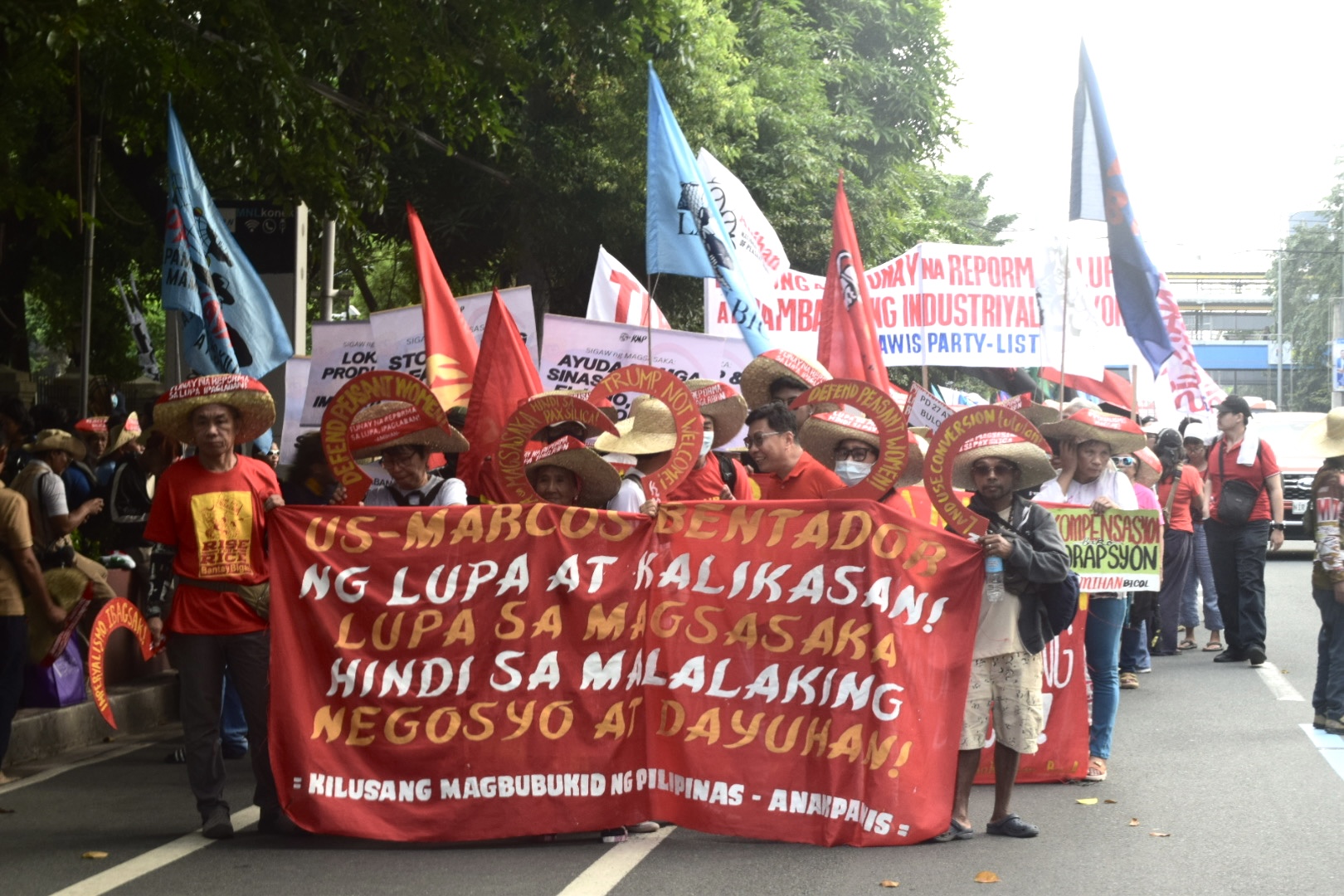
Peasant groups call for genuine, long-term government support, in commemoration of Peasant Month and for the upcoming Super El Niño. (Bismark Marasigan/Likas)
Peasant group Amihan National Federation of Peasant Women said government interventions for the upcoming Super El Niño are insufficient to support rice farmers as they seek long-term solutions.
According to the latest PAGASA advisory, El Niño is expected to persist until the first half of 2027 and may peak before the year ends. Additionally, over 200 local government units (LGUs) have declared a state of calamity over the intensifying dry season.
“Worsening severe [involuntary] hunger inaasahan natin ngayong susunod na mga buwan, dahil sa pagliit o walang maani ang ating mga magsasaka, dahil yung intervention ng gobyerno ay sobrang insignificant,” said Bantay Bigas Spokesperson and Secretary General of AMIHAN, Cathy Estavillo, in an interview with Likas.
According to the World Food Programme (WFP), this El Niño estimates a 22% increase in the number of people facing acute hunger worldwide by the end of 2027—with areas in Asia and the Pacific potentially pushing at least 8.2 million people into acute hunger.
This is in relation to the reported agricultural damages in the months before the projected El Niño. In late September, around P6.87 billion in agricultural damages was reported by the Department of Agriculture (DA), while, as of October 21, farm losses have climbed to P8.57 billion—with the country bracing for P20 billion due to prolonged drought.
In an attempt to mitigate the effects of El Niño for farmers and fisherfolk, the DA has requested a total of P45 billion under the Unified Package for Livelihoods, Industry, Food, and Transport (UPLIFT) fund. In a Malacañang press briefing, Agriculture Secretary Francisco Tiu Laurel Jr. said that P6.2 billion has already been released—intended to “help farmers maintain production in areas facing water shortages.”
However, Estavillo said the production subsidy and compensation will only last one week.
“Kapag dinivide natin yung P45 billion diyan sa 9.7 million farmers, fisherfolk, at agricultural workers, P4,600 [lamang] per farmer,” said Estavillo.
“Wala pa ngang one week kapag ginastos yan ng ating mga magsasaka at marami pang mga hindi nakakakuha dahil sa bureaucracy at corruption. Kung sino lang yung malapit na kilala sa barangay ay yun lang talaga yung bibigyan,” she added.
Aside from lacking subsidies, Estavillo expressed that areas such as Sorsogon lack underground water for their deep well pumps and irrigation systems, making these areas more vulnerable to drought.
In an October press release, Tiu Laurel urged the public not to panic, saying food supply remained sufficient and prices stable despite slower farmer output, as the dry spell’s peak was pushed from November to January. However, the Philippine Statistics Authority (PSA) reported that food inflation accounted for 34.4% of overall price acceleration in September, with rice among the major drivers of price pressure.
Proposed Alternatives
Rice farmers in Region XI have been urged to shift to drought-tolerant crops, such as legumes and watermelon, as unhusked rice grain, or palay, becomes vulnerable in its reproductive stage in December. Additionally, the DA, together with the National Food Authority (NFA), has opted to keep rice imports open and increase warehouse capacity to buy directly from local farmers.
For Estavillo, the proposals aren’t suitable to the Philippine culture and the farmers’ realities—saying the government cannot ask to shift the country’s rice diet to prioritize other crop varieties resilient to moisture stress.
According to her, organic farming, an agricultural system prohibiting the use of synthetic chemicals, has been a known cheaper alternative, but isn’t largely practiced because most landowners, such as landlords and multinational companies, dictate what will be planted.
Additionally, Estavillo observed a liberalized local agricultural industry where organic farming isn’t promoted by the government due to agrochemical corporations’ largely imposed seeds, fertilizers, and pesticides.
“Number one rice net importer ang Pilipinas tapos yung mga magsasaka, mga mangingisda na siyang pinanggagalingan ng pagkain na ibebenta sa ating mga palengke, ay nagugutom na sila,” Estavillo said.
Moreover, rice production operates under monopoly pricing, according to Estavillo. Although the NFA plans to expand storage to boost palay buying, Estavillo stressed that only a small percentage of the overall production goes to the farmers.
Moving forward, AMIHAN calls for proper prioritization of dams to ensure proper irrigation for farmlands and hopes for future legislation that supports local farmers. Estavillo particularly called for the abolition of the Rice Tariffication Law, which liberalizes importation, exportation, and rice trading in the country, as it worsens the income loss of farmers.
“[Ang] issue ng siguraduhan sa pagkain, issue sa hunger, ay hindi lang issue ng magsasaka kundi issue ng buong mamamayang Pilipino. Ayaw natin na mawala na yung mga rice field natin, mapalitan ng gamit at iasa yung pagkain natin sa pag-iimport. Mas lalo tayong maghihirap,” she said.
This story is part of Likas Publication's El Niño coverage series.
Keep reading
News section
As El Niño Looms, Hospitals Brace for Water and Power Shortages

Residents, Environmental Group Link Liwliwa Erosion to Dredging as Danger zone Declaration Looms