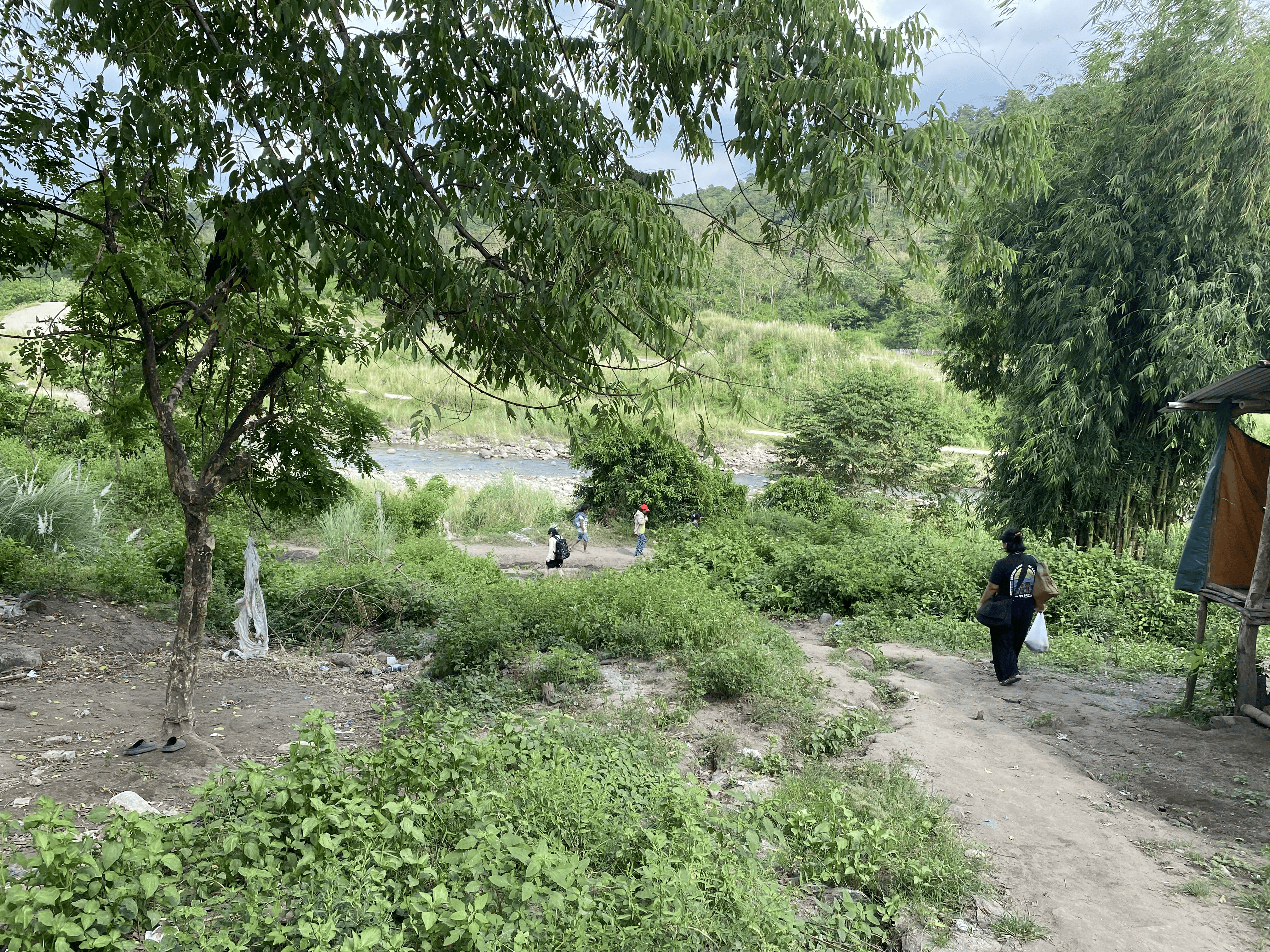
Ilawod at Ilaya, Para sa Iilan: How Outsiders Seek Solitude in UP Diliman's Spaces
No matter how our terms have evolved from ilawod and ilaya, urban and rural, to province and city, they are all so different, yet become so similar when we realize how much we have to fight for to even set foot in it.
LILIM. Shades of palm and skies shroud over UP Lagoon. (Sam Arinto/Likas Publication)
Younger students from outside schools seek solitude in UP's open spaces to have sabayang pagbigkas practices, dance competition warm-ups, field demo rehearsals, or just to have a simple badminton or volleyball game. Some of them take advantage of the natural light and serene environment as a filming location.
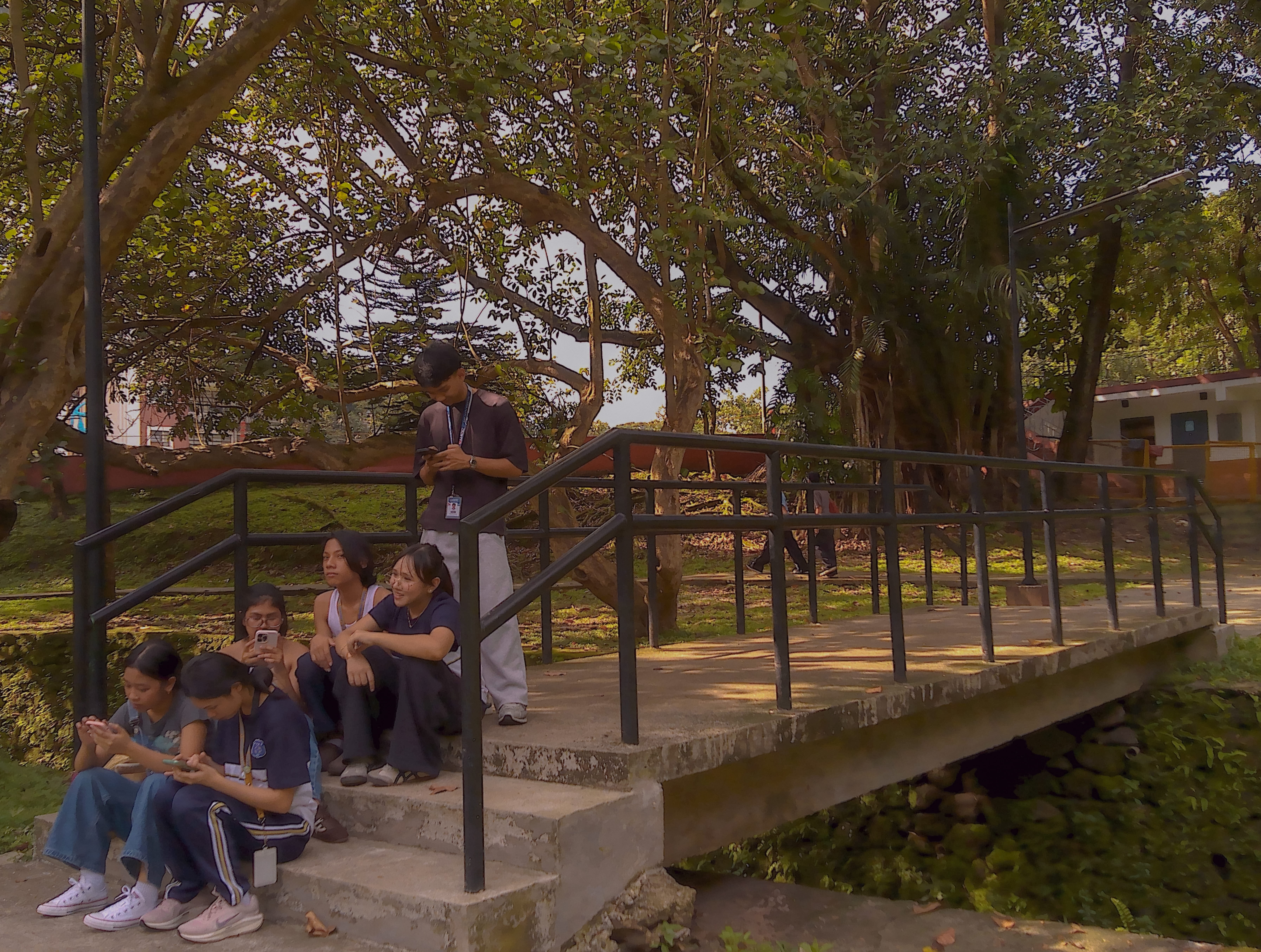
GROUP WORK. Six senior high school students debrief while waiting for their rides to go home.
After all, the campus has no entrance fee and is fairly accessible by public transportation. With over 45 hectares of open space, UP Diliman is one of the last few green spaces in the metropolitan.
A group of Grade 11 students from España, Manila crossed cities just to go to the Lagoon for a class project. "May grass po. Then may water. Connected po kasi siya sa film namin," Hanna, the assistant leader of the group, explained.
MOVE IT. The group finished shooting their school project, bickering on how to far their homes are.
They have touched this grass before. Although this was their first time as a group, these students are frequent visitors of the campus. Tria, portraying one of the group's actors, even used to sell the trending Dubai chewy cookie with her friend: "[From] April to June, umuupo lang po kami sa mga corner. Every weekend po kami nandoon tapos, halos lahat ng dumadaan na nagja-jogging, bumibili."
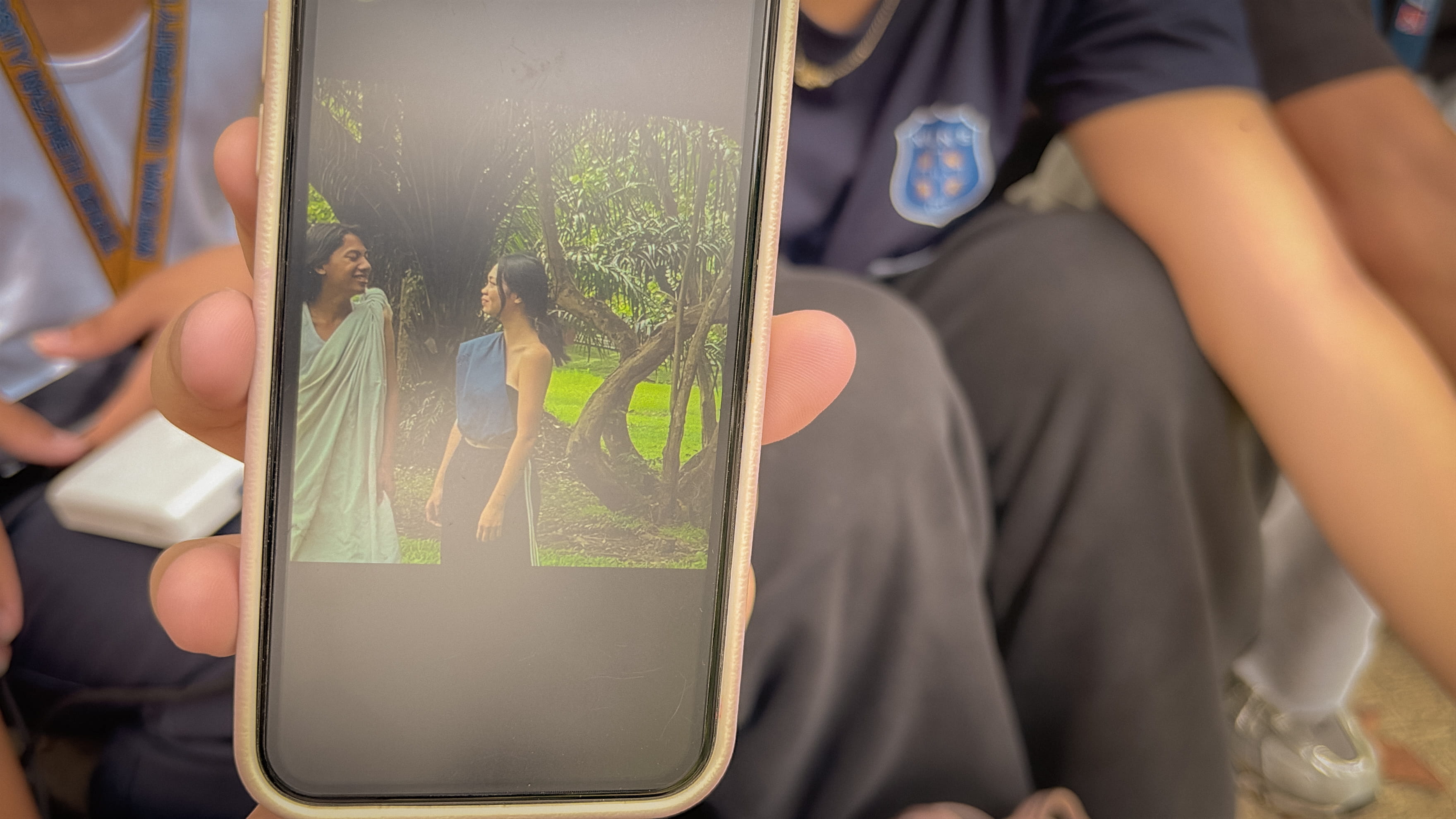
TAKE ONE. A preview of the students' 'ilawod at ilaya' group film project.
Under their Pag-aaral ng Kasaysayan at Lipunang Pilipino subject, which translates to the 'Study of Philippine History and Society', the group of six was assigned a region in the Philippines to represent and retell a folklore or legend of their choosing. They landed on the story of the 'ilawod at ilaya'.
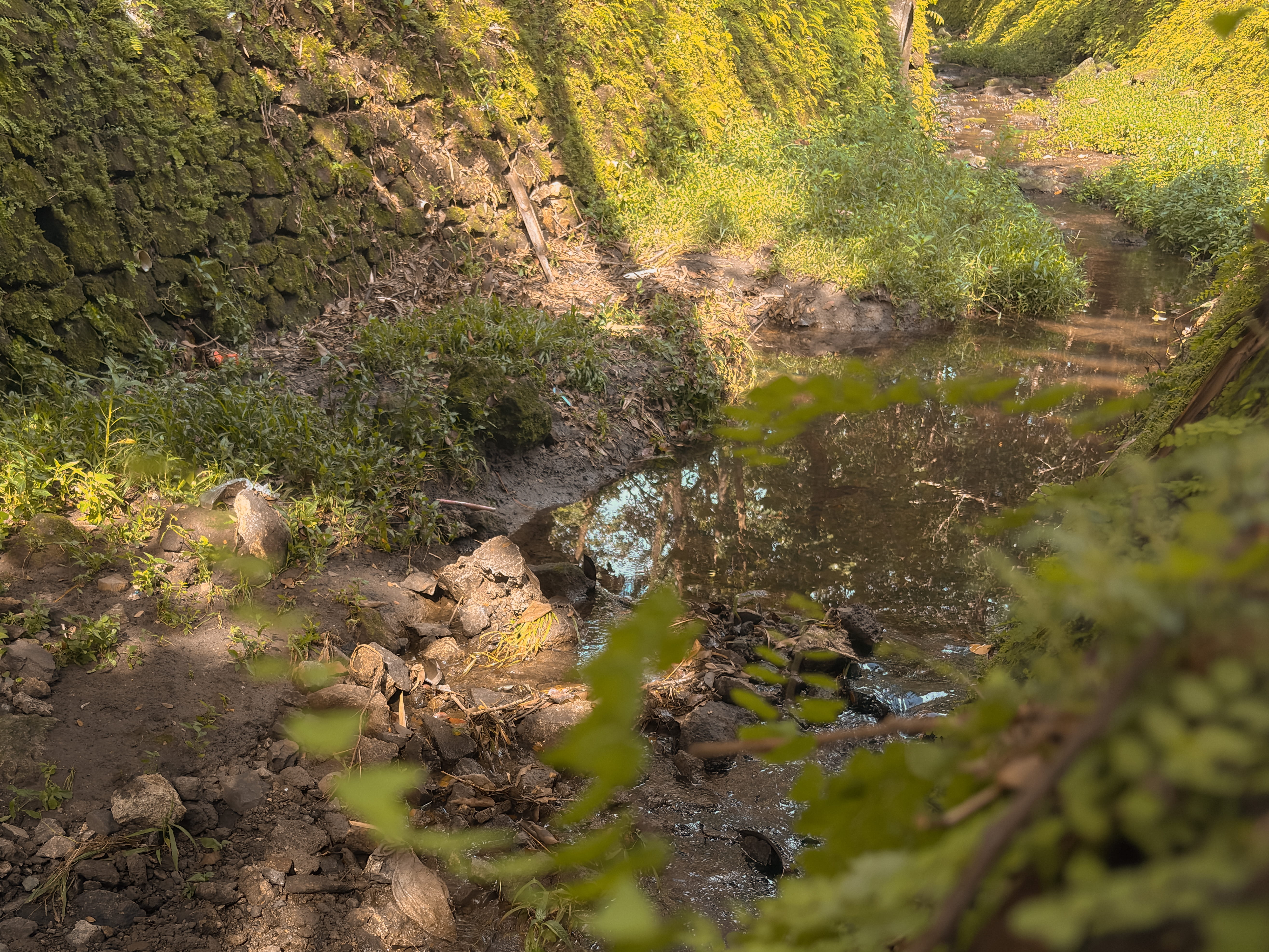
ILAYA. Running water in UP Lagoon's creek glistens in the afternoon sun.
"Kapag may ginagawa 'yung nasa taas, for sure may napupunta sa baba, which is, nakaka-affect doon sa mga taga-ilawod po. Mag-aaway po sila kapag siyempre nakaka-affect sila [sa isa't isa]. Pero the time goes by, nagkakaayos rin sila kasi dahil nari-realize din nila na, bakit need nila makipag-aaway kung puwede naman nila ayusin 'yung paggamit doon sa river," Misha, one of the "ilaya" sumarized the story.
How poetic a group of students reinterpreting a legend on how our ancestors' grappling relationship with land and space is also grappling for a space to even recreate it in the first place.
LILIM. Shades of palm and skies shroud over UP Lagoon.
Way before this archipelago was forcefully made into what it is now, lands are still defended, guarded and grabbed. Spaces are luxuries paid for and rented.
Travelling tens of kilometers to frolic with the grass and hear the mayas sing has become a privilege. For children to grow up in the polluted city is to once become a stranger to natural beauty. No matter how our terms have evolved from ilawod and ilaya, urban and rural, to province and city, they are all so different, yet become so similar when we realize how much we have to fight for to even set foot in it.
*Names were modified in the story for security purposes.