How Used Parts Find New Life in Guadalupe Jeepneys
A redesigned speaker at Kimston Terminal showcases how some things can find a new purpose beyond their original use. However, reuse alone cannot address this growing problem of electronic and solid waste is a shared responsibility to keep hazardous waste from harming communities and the environment.
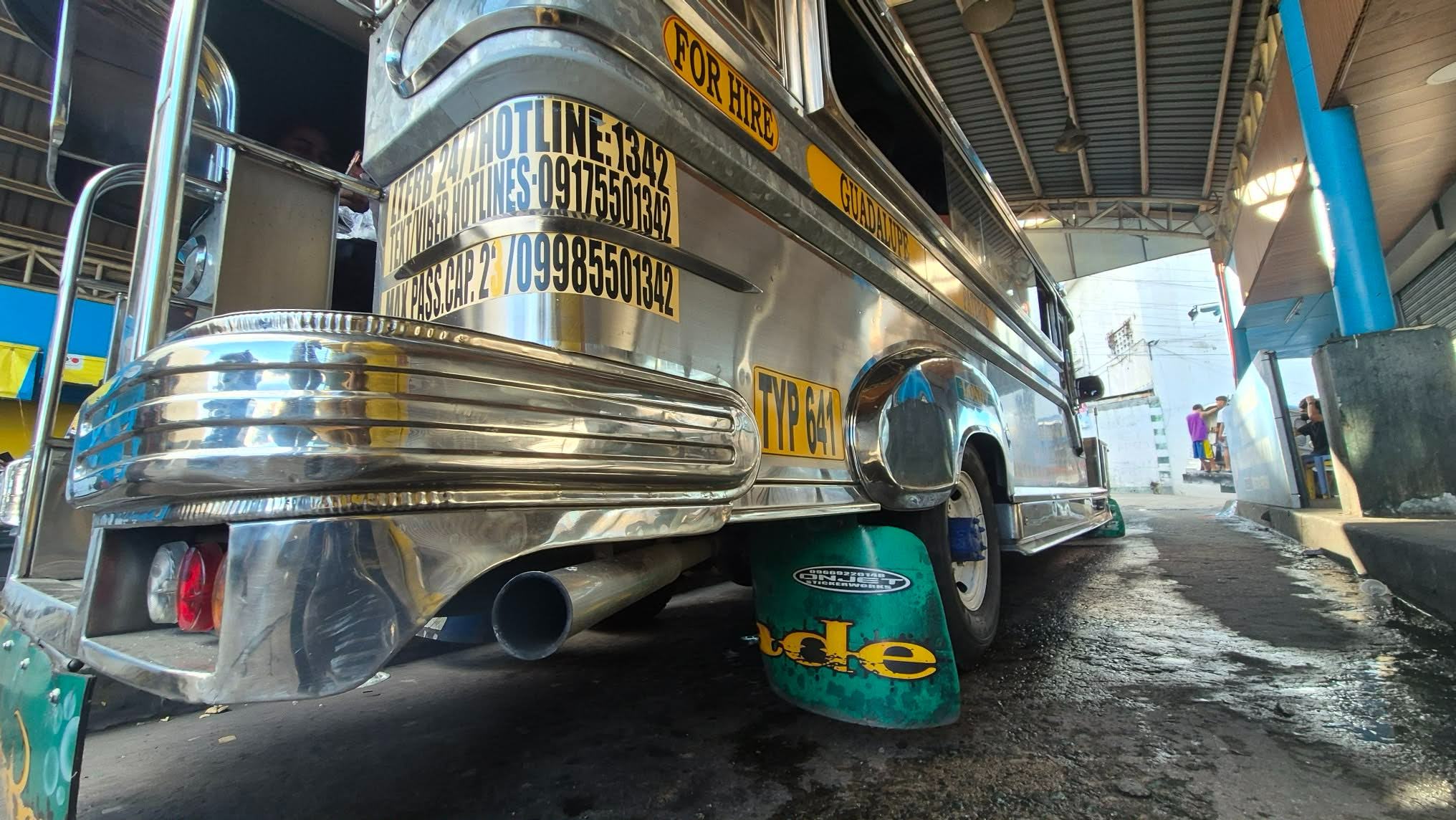
A jeepney parks at Kimston Terminal, which serves the Guadalupe–FTI route. The terminal serves the many working Filipinos who just departed from the nearby MRT-3 Guadalupe Station. (Carlos Isaac V. Bernardino/Likas)
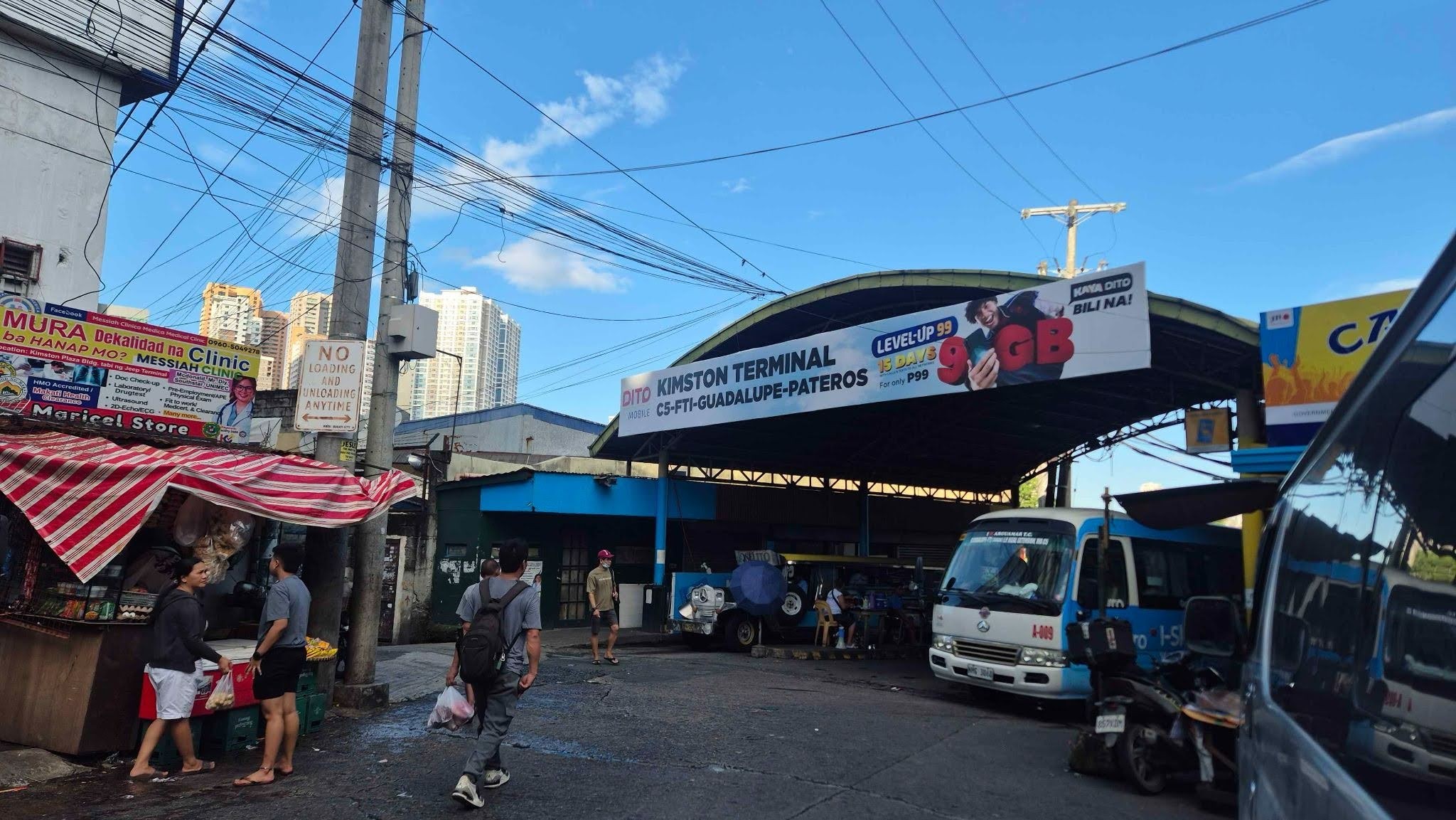
Front of Kimston Terminal, which serves the Guadalupe–FTI route. (Carlos Isaac V. Bernardino/Likas)
The practice of reusing materials and making them part of jeepneys is not entirely new. From bottle caps being used as covers for wheel bolts and diesel engines being overseas surpluses, jeepneys have long incorporated materials that serve a purpose beyond their original use.
And in Makati, the Guadalupe–FTI jeepney terminal, also known as Kimston Terminal, serves as one of the places where public transportation upholds the necessity for its environmental preservation in the form of a mobile recycling plant.
At the terminal, Kuya Troy, the son of a mechanic, was installing a speaker salvaged from an old karaoke system in a jeepney parked third in the queue for passengers.
“Para lang makatipid po,” he said.
(So we can save on costs.)
At the back of the terminal, a pile of discarded items is kept for repairs and fittings. Among them is the karaoke system from which the speaker was taken.
Troy said they keep the pile nearby, despite its proximity to living quarters, to avoid having to shop for materials or components.
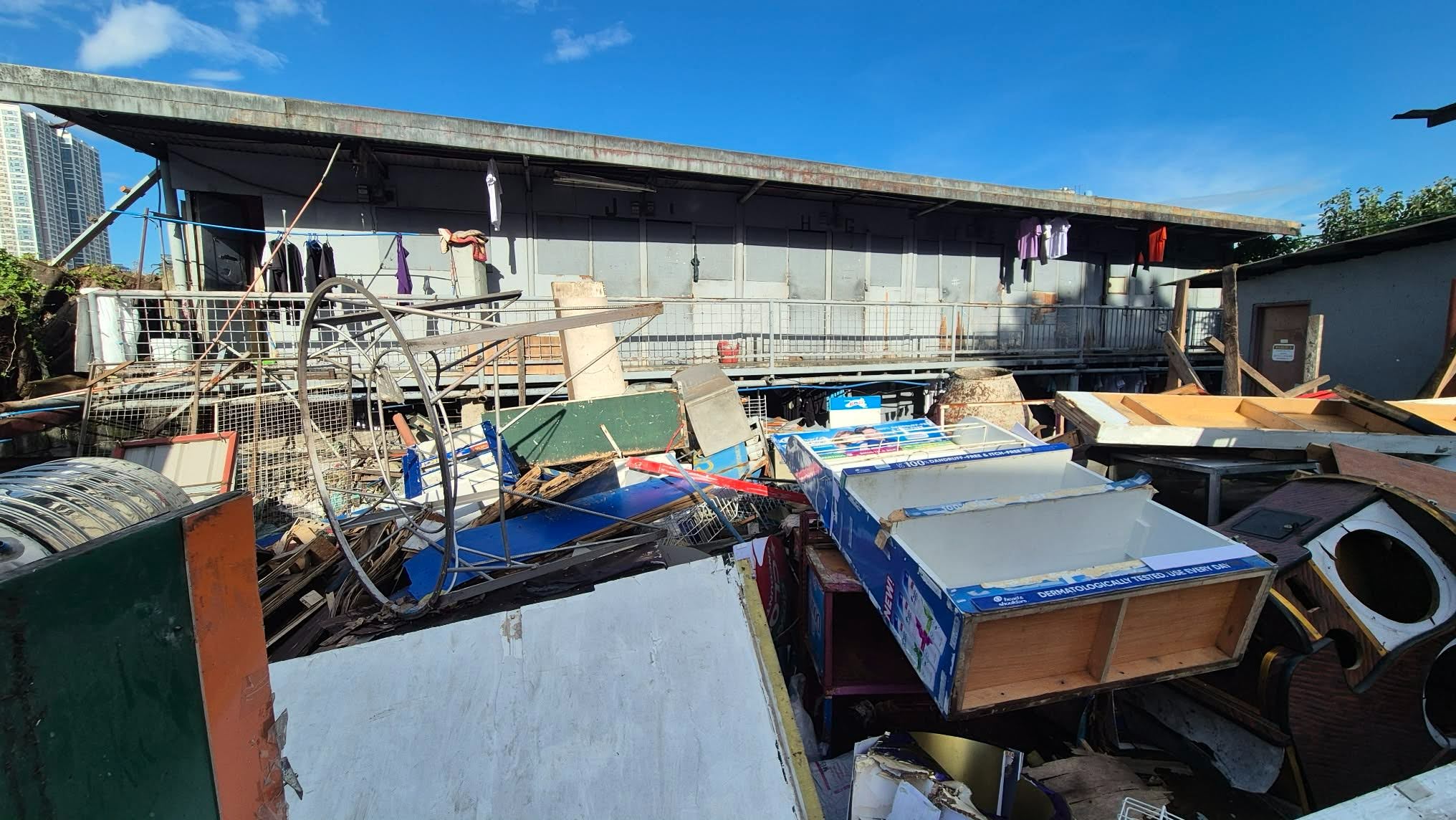
Discarded items kept behind Kimston Terminal provide materials for repairs. (Carlos Isaac V. Bernardino/Likas)
The practice takes place against a wider problem of discarded electronics. The Philippines generated approximately 537,000 metric tons of electronic waste in 2022, or 4.7 kilograms per person, according to the Global E-Waste Monitor 2024. At the terminal, a component from one such appliance is being put back into use.
Keeping parts in service
The speaker is one example of how jeepneys are assembled and maintained with available materials. Drivers’ seats can be refurbished from old cars, while chassis can be carried over from decommissioned jeepneys.
Mismatched 15-inch rims are also fitted from those already on hand. Plastic bottle caps also serve as covers for wheel bolts, while discarded wood panels are sometimes used as the floorboard.
The jeepney bodies combine different materials as well. A 2009 study documented the use of galvanized iron, stainless steel, and aluminum panels among the jeepney manufacturers it surveyed. Though these materials are not always salvaged, they are extremely cheap and abundant.
The reliance on used parts extends beneath the body, as jeepneys also use secondhand diesel engines sourced through Japanese surplus stores. The aforementioned study found that 10 of the 12 manufacturers they surveyed used surplus or reconditioned secondhand engines.
These engines are often from Japanese surplus; a 2015 study of vehicle manufacturers likewise documented Isuzu and Mitsubishi units among the jeepney models surveyed.
Troy added that keeping expenses down also explains why some jeepneys have recently looked more worn and rugged. Fuel is one of the costs behind that pressure, with diesel prices rising by P1.20 per liter on October 27, 2026, following a P2.60 increase the previous week.
Meanwhile, Bangko Sentral ng Pilipinas data show that the US dollar averaged P62.61 in September, up from P59.16 in January. A weaker peso makes dollar-priced imports, including fuel, more expensive in peso terms, which forces jeepney drivers to utilize on-hand materials rather than buying new components given their high cost and prioritizing gas.
Parts with another purpose
The same surplus shops supply more than engines. Because of them, a few drivers have also taken an interest in vehicle melody boxes, which play recorded tunes or spoken warnings.
Fitted to trucks and jeepneys, these devices sound announcements when the vehicle turns or stops.
One Japanese warning says, “扉に鞄をご注意ください 。” (To-bi-ra ni ka-ban o, go-chūi kudasai.)
(Please be careful with your bags at the door.)
Although purely functional in its use in Japan, here in Manila, it is mostly used as an accessory to a tsuper’s jeepney, adding personality to their vehicle where they spend most of their day.
“Libre naman kasi, pero iba naman binibili. ‘Tsaka yung ibang kinakabit, may sentimental value, eh mahalaga yan kung parang bahay na rin yung jeep nila no? Buong araw minsan yung mga tsuper na yan.”
(Because it’s free, but sometimes they buy certain things too. And some of the things they attach have sentimental value, and that matters when their jeepney is already like a home, right? Sometimes those drivers are in it the whole day.)
This care drivers have for their jeepneys stays strong despite the rising costs, as Tsuper Lomi, one of the drivers of the fleet, puts it.
“Mga biyahe namin, para sa pamilya rin, kaya nakakatulong din ang mga ganitong anik-anik para nakakatuwa naman minsan,” Tsuper Lomi said.
(Our job is for our family, so trinkets like these give a bit more joy in what we do to keep at it.)
Beyond the terminal
For residents travelling through Guadalupe and the nearby MRT-3 station, these vehicles provide local transport. For the workers maintaining them, keeping usable parts nearby reduces the need to purchase replacements, according to Troy. While repurposing these discarded materials can delay their disposal, it does not remove the need for proper waste management, especially when these electrical leftovers can no longer be reused.
According to the National Solid Waste Management Commission, the Philippines generates about 61,200 metric tons of waste daily. Moreover, of the plastics consumed in the country, only 9% are recycled, while 33% are disposed of in landfills and dumpsites.
Another 35% leaks into the open environment, which places the Philippines third in the world for plastic leakage.
The karaoke system at the terminal is one of many discarded electronics worldwide. Based on the Global E-Waste Monitor 2024, only 22.3% of the 62 million metric tons of e-waste generated in 2022 was documented as formally collected and recycled, while most is managed outside formal schemes.
The World Health Organization affirms that when e-waste is handled in unsound ways, it can release up to 1,000 different chemicals, including lead and mercury, into the air, soil, dust, and water of nearby communities, and children and pregnant women are the most vulnerable to these exposures.
A redesigned speaker at Kimston Terminal showcases how some things can find a new purpose beyond their original use. However, reuse alone cannot address this growing problem of electronic and solid waste is a shared responsibility to keep hazardous waste from harming communities and the environment.