The Philippines Cannot Clean Its Rivers Without Changing Its Habits
The Philippines is the largest source of riverborne plastic because tons of plastic waste flow through the rivers and into the ocean. The recurring floods, damaged marine ecosystems, and growing health risks reveal a problem.
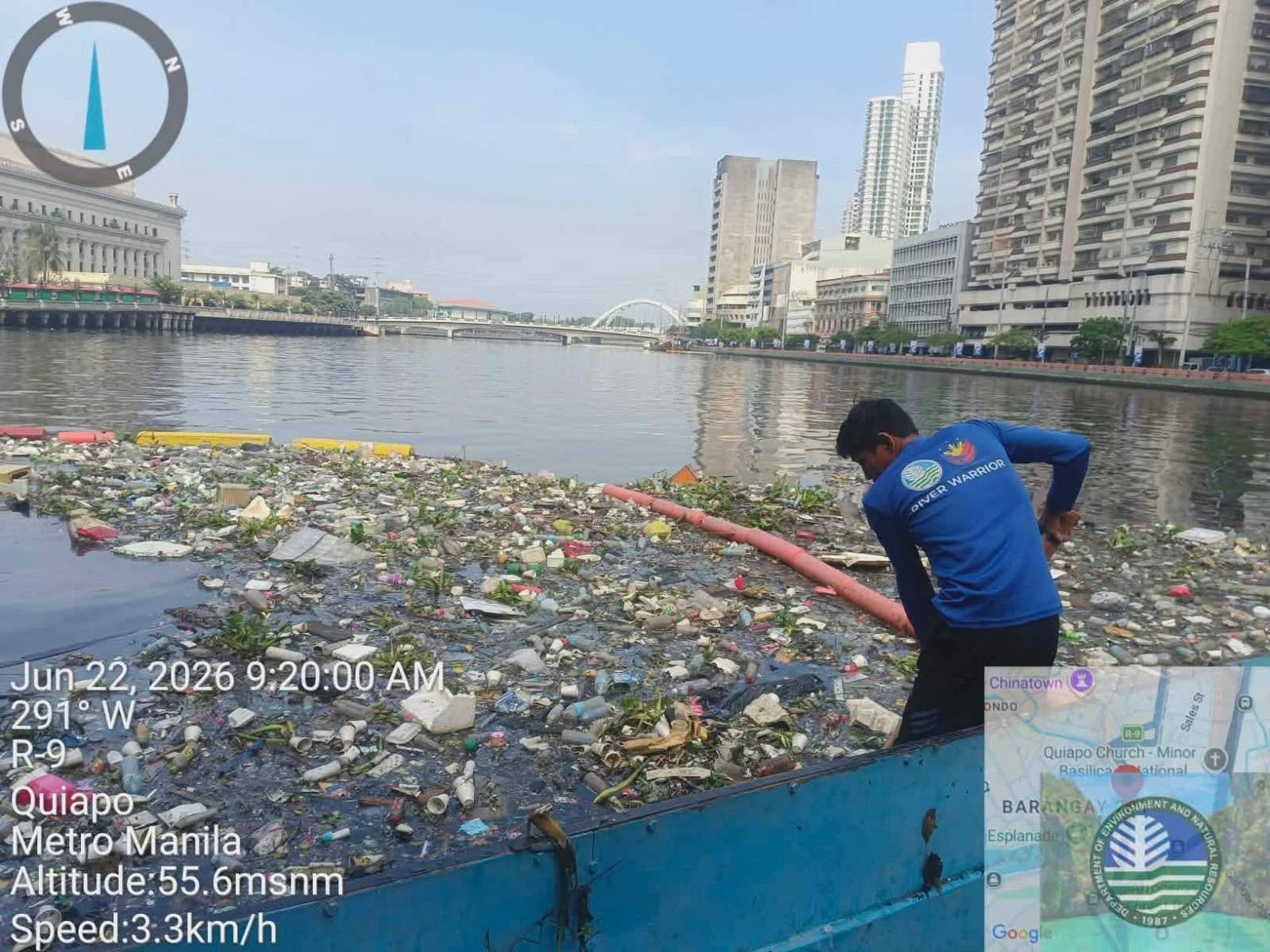
A man picks up trash along the Pasig River Esplanade in Intramuros for the DENR NCR clean-up operations on June 22, 2026. (Intramuros Administration/Facebook)
The Philippines is the largest source of riverborne plastic because tons of plastic waste flow through the rivers and into the ocean. The recurring floods, damaged marine ecosystems, and growing health risks reveal a problem. While government agencies and environmental groups continue to clean waterways and improve waste management systems, it takes more than the system to address river pollution. What we also need is general discipline among Filipinos in how they dispose of their waste.
In 2019, global plastic pollution sent to the ocean through rivers every year stood at 979,458 tonnes, according to Our World in Data, a non-profit online publication. The Philippines sent around 356,000 tonnes, or 36% of riverine plastic pollution, making it the top contributor. The Pasig River alone accounts for 63,000 tonnes, or around 6.43% of the worldwide total.
In response to knee-deep floods in low-lying areas caused by Super Typhoon Francisco in June this year, Metropolitan Manila Development Authority (MMDA) General Manager Nicolas Torre III said that one of the reasons flooding is prevalent in Manila is because of garbage in the pumps and waterways. The MMDA retrieves around 7000 tonnes of garbage annually from the pumps’ waterways, including plastic packaging, broken toys, and old furniture. These kinds of floods are man-made and are no longer natural disasters. The lack of discipline among residents near the pumps worsened the flooding.
Garbage flowing through drains and rivers into the sea also poses long-term problems, threatening ocean biodiversity and human health. A 2018 study found that plastic on coral reefs raises the likelihood of disease outbreaks from 4% to 89%. The pieces break down and turn into microplastics, which can carry bacteria to the ocean across long distances, release chemicals into the water, or be ingested by the fish we eat and enter our bodies. As a result, people with microplastics in arterial blockages face higher risks of heart attack, stroke, and death. We become what we eat over time; we throw the garbage we don’t want in our rivers to eat bits and pieces of it later.
To address these problems, the Department of Environment and Natural Resources and nonprofit The Ocean Cleanup signed a five-year agreement to remove and manage floating waste from the Pasig River to Manila Bay, in line with Republic Act 11898, the Extended Producer Responsibility Act, which requires large companies to recover and recycle their single-use packaging that consumers improperly discard. These sachet products, especially toiletries, are popular among low-income households for their lower price compared to their wholesale counterparts.
The law is ineffective, only requiring companies to retrieve their single-use plastic sachets instead of discouraging their sale and production. If Filipinos are responsible enough not to let sachets flow with the currents while bathing in the river, only then will the law’s existence be justified.
President Ferdinand Marcos Jr. also made efforts to legally bolster our waste management by updating the country’s current policies. In his fifth State of the Nation Address, he planned to amend the Ecological Waste Management Act to lessen flooding by aligning the law to adhere to modern waste management (e.g., waste-to-energy and waste treatment technology). This is counterintuitive, as some waste-to-energy plants burn garbage to generate electrical energy and other salvageable materials. The plants will release carbon dioxide into the surrounding air through cellular respiration, potentially contributing to increased atmospheric carbon dioxide levels. It will take less effort, money, time, and environmental harm to teach Filipinos how to properly dispose of plastic waste instead of constructing plants that will disperse that same garbage into our air anyway.
While these plans help stave off plastic pollution in rivers, they fail to address the fact that the Philippines could use more discipline from everyone. Our rivers are polluted due to improper waste disposal; corporations incentivize the use of cheap single-use plastic products; the government shows general neglect and “fixes” said problems with band-aid solutions. If these plans were to take effect, we as individuals should learn to dispose of our garbage properly, refrain from throwing garbage into our rivers, join cleanup projects along our riverbanks, and advocate for a more sustainable waste management system.